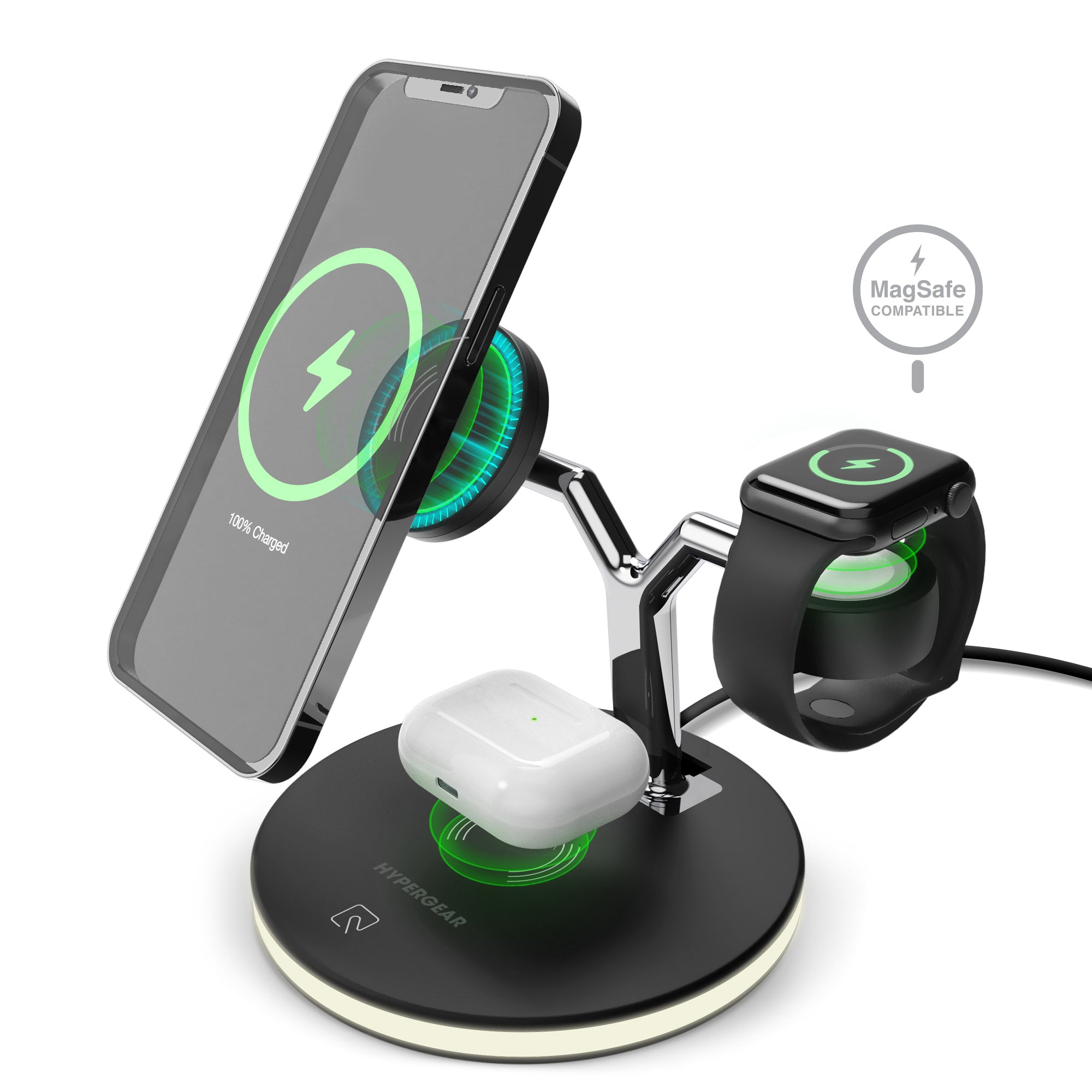
The Future is Here: Exploring the Benefits of Wireless Charging
The future of technology is undoubtedly bright, with innovations transforming the way we interact with devices. One such advancement is wireless charging, which is rapidly gaining popularity among consumers. This technology allows users to charge their devices without the hassle of tangled cords and connectors. By simply placing a device on a compatible charging pad or surface, users can enjoy a seamless charging experience. The convenience offered by wireless charging extends beyond mere practicality; it also enhances device longevity by reducing wear and tear on charging ports, ensuring that our gadgets remain in optimal condition over time.
Moreover, wireless charging promotes a cleaner and more organized environment. By eliminating the need for multiple charging cables, consumers can simplify their setups, reducing clutter on desks and nightstands. This technology is also becoming increasingly energy-efficient, with advancements in charging efficiency allowing for faster charging speeds and improved energy conservation. As more devices adopt this innovative charging method, the potential for widespread implementation becomes apparent. From smartphones to electric vehicles, wireless charging is set to revolutionize how we power our devices, making the future truly wireless.
Counter-Strike is a popular first-person shooter game that has captivated players worldwide since its release. The game's competitive nature, along with its tactical gameplay, has made it a staple in the esports community. For those looking to enhance their gaming experience, you might want to check out the Top 10 Wireless Charging Stands for optimal performance.
Top 5 Myths About Wireless Charging Debunked
Wireless charging has gained immense popularity in recent years, yet it is often surrounded by misconceptions. One of the most prevalent myths is that wireless charging is significantly slower than traditional wired charging. While it is true that some wireless chargers may have lower wattage and, therefore, slower charging speeds, many modern cordless chargers offer comparable speeds to their wired counterparts. In fact, some devices are designed to support fast wireless charging, making the experience not only convenient but also efficient.
Another common misconception is that wiresless charging generates harmful radiation. This concern stems from a lack of understanding of how the technology works. Wireless chargers utilize inductive charging, which involves an electromagnetic field to transfer energy. This process is considered safe, as it emits lower levels of electromagnetic waves than many everyday devices, such as cell phones. Thus, users can confidently embrace wireless charging without worrying about potential health risks.
How Does Wireless Charging Work? A Deep Dive into the Technology
Wireless charging is based on the principle of electromagnetic induction, a technology that allows energy to be transferred between two objects without the need for physical connections. In its most common form, wireless charging utilizes an inductive charging pad that creates an electromagnetic field through copper coils. When a compatible device, like a smartphone, is placed on the charging pad, a second coil inside the device receives this electromagnetic energy and converts it back into electrical energy to charge the battery. This process not only adds convenience but also reduces wear and tear on charging ports.
There are several key components involved in the wireless charging process, including transmitters and receivers. The transmitter, found in the charging pad, generates an alternating magnetic field, while the receiver, embedded in the device, captures this field and converts it. Generally, there are three widely adopted standards for wireless charging: Qi, PMA, and A4WP. Among these, Qi has emerged as the dominant standard, supporting fast charging capabilities and ensuring compatibility across a variety of devices. As technology evolves, improvements in efficiency and charging speeds continue to enhance the user experience.